


| Dental Podcast Episode - The Dr. Phil Klein Dental Podcast | Listen on: |
|

|

|

|
and others. |
Episode 590: Sedation in Dentistry: How Far Should We Go and How Much Training Do We Need?
 |
Disclaimer
Viva Learning LLC sites offer content that include opinions, techniques, recommendations, etc. from a variety of writers and speakers that are not necessarily endorsed by Viva Learning LLC, its associates and sponsored Viva Affiliates. Viewers are responsible for verifying the validity, accuracy and relevance of all content before implementing any techniques, products or recommendations into their clinical setting. Viewers understand that Viva Learning LLC, its associates, writers, speakers and sponsored Viva Affiliates are not in any way responsible or liable for any adverse events that may occur (i.e., in a clinical setting or anywhere) based on any information disseminated from Viva Learning LLC sites, including all Viva Learning sites.
The copyrights and other rights to the slides and video contained in a webinar posted on this website are owned by the speaker, Viva Learning LLC, and/or the sponsor company and/or its subsidiaries worldwide. Viewers are only authorized to view the content of the webinar (live and archive) at this Website and are not permitted to screen capture, record and/or download any content displayed in this webinar. You may not make any part of this Website available as part of another web site whether by hyperlink framing on the Internet or otherwise.
The copyrights and other rights to the audio contained in a Viva Podcast are owned by Viva Learning LLC. Viewers are authorized to listen to the content of the podcast and are permitted to download any podcast for personal use only. You may not, however, make any part of this Website available as part of another web site whether by hyperlink framing on the Internet or otherwise.
By signing up for a free webinar and/or podcast you give Viva Learning LLC and/or its Viva Learning Affiliates permission to send you emails alerting you to future CE opportunities and e-learning content.
California State Dental Board Provider Statement
Viva Learning is a registered continuing education provider in the state of CA. Dental Board of CA Provider #RP 5747. Approved through 6/30/2026
Questions regarding our Conditions of Usage, Privacy Policy, or other policy related material can be directed to our support staff by clicking on the "Support" link or you can email us at: support@vivalearning.com.
Approval does not imply acceptance by any regulatory authority or AGD endorsement.
Approval period: 11/1/2025 - 10/31/2029. AGD Provider # 217544
Presenter Information: Dr. Stanley Malamed
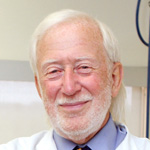 |
Dr. Malamed is a Diplomate of the American Dental Board of Anesthesiology as well a continuing education lecturer on anesthesia, sedation, and emergency medicine. He has authored more than 170 scientific papers and three textbooks that are used around the world. |
Viva Learning is an approved AGD PACE Provider and California State Dental Board Provider of dental continuing education. Viva Learning strives to deliver balanced, objective and clinically relevant information grounded on scientific research. Lecturers who are invited to deliver Viva CE webinars are advised to substantiate their claims with research-supported data and to disclose all commitments to, or relationships with, any commercial entity within the dental industry. In many cases, lecturers are sponsored by a dental manufacturing company, which provides them with support in the form of honorarium and/or dental products and equipment in order to help with clinical presentations. Prior to each live CE webinar, lecturers are made aware of the importance of delivering their presentations without commercial bias, and where appropriate, to mention a variety of different product choices that may be relevant to the subject matter of the lecture, for the educational benefit of the participant.
Transcript
Today, we'll take a closer look at the different kinds of sedation that we as dentists can offer
our patients. What types are available? What are the risks and benefits? And how much training do
we need to administer sedation to our patients? To answer these questions and more is our guest,
Dr. Stanley Malamed. Dr. Malamed is a world-respected dentist anesthesiologist and emeritus
professor of dentistry at the Herman Astro School of Dentistry at USC, formerly the University of
Southern California School of Dentistry. Dr. Malamed will be joining us in a second, but first, we
all know that to achieve healthy, beautiful smiles, we sometimes need to align the teeth. And to do
so, aligner therapy is a great option. So why not set your practice apart with 3M Clarity Aligners
Flex, designed for comfort? Clarity Aligners Flex feature a thin, flexible design,
yet they deliver excellent force persistence over a two-week period. Plus, they resist scratching
and stains, and they're backed by a dedicated clinician team providing support every step of the
way. With a variety of affordable case-type options, single or dual-arch, Clarity Aligners Flex
offer a great value to your patients and practice. To learn more, visit 3M.com slash clarity dash
aligners dash flex. Dr. Malamed, it's a pleasure to have you back on the show. Phil, nice to be
back. Dr. Malamed, if you would, talk about sedation as far as the dental practice is concerned.
What kinds of sedation are available to the clinicians and to our patients? And talk about some of
the indications. Very specifically, two techniques, oral sedation versus intravenous sedation.
So let's talk initially, what is sedation? And if you go to the dictionary,
this is what it says, a relaxed calm, or sleepy condition that results from taking a drug called a
sedative. And it's also number two, the act of giving a person a drug that causes calmness or
relaxation. This is what we're doing. Why are we doing it? Well,
I have over the years looked at many, many surveys of common fears.
And sadly for us, dentistry is usually in the top 10.
This one I picked, public speaking, is number one. This one, number two, is going to the dentist,
fear of heights, fear of mice, fear of flying, and again, other fears.
But dentistry, our profession, are we proud to be number two? I don't think so. I found this
interesting. Jennifer D. St. George published a survey back, it was 2004,
and it's a patient is seeking a new dentist. What are they looking for?
This is what they want in their dentist. In 2016, there was a survey done in the United Kingdom,
the top 10 reasons why people hate the dentist. On the left-hand side,
things like the sound and the smell, the invasiveness, the drill, the anxiety.
Number two is the pain. Number one is the needle. What do they want from a dentist?
Number two, a dentist who doesn't hurt. and a painless injection. Same two things.
People dislike what people want. They don't want to be hurt and they want painless injections.
So what are our goals? The reason we're doing sedation is because people don't like going to the
dentist for those very obvious reasons. So what are we looking for? What are the goals of sedation?
And it boils down to this, the scared dental patient, everything we do for them,
they're just overly aware of it. If you blow air in their mouth,
I think everybody who's listening to us has had a patient, when you just blew air toward their
mouth, they went, ow. When you touch them on your lip with your finger, they went, ow. They
overreact. They overreact everything, which makes our life as a doctor more difficult,
makes our treatment of that patient more difficult. So the goals of sedation,
the primary goal of sedation, is to distract that patient. You take that patient's mind off of what
we are doing in their mouth while they're in the dental chair. Take their mind away from it.
In addition, what we're doing is taking a patient who cannot handle stress as well.
So we're talking about the extreme dental phobic. We're talking about the medically compromised
patient, a person who is stress intolerant, and we're allowing them to receive I would say high
-quality dental care, safely and efficiently. And I think it's also important to note that we use
sedation to reduce anxiety to prevent medical emergencies, which is something you've talked about
for years. So let's take a look at that. This is part of a survey that an article I had published,
it was way back in 1993, where I surveyed over 4,300 doctors in the U.S.
and Canada. And I was asking them questions about their experiences with medical emergencies.
So long story short, 4,300 dentists reported that in their career, they had encountered over 30
,000 medical emergencies. The number one medical emergency by far, a little bit over 50% of all
the emergencies in the survey was fainting, syncope. Now, very simple,
happy people don't faint. Scared people faint. which will lead us back into our program for today.
Now, in addition to syncope, angina, seizures, asthma, hyperventilation,
and the epinephrine reaction, these are called stress-related medical emergencies.
A patient with angina comes into your office, they don't have chest pain, okay? But if they get
scared, if they get hurt, their heart rate goes up. And when their heart rate goes up, they have...
anginal pain. A person with asthma, they're not having an asthmatic attack when they're sitting in
the chair, but if you hurt them, if they get stressed, they're going to have bronchospasm. So these
are emergencies. These six emergencies on this list, again, are called stress-related.
Now, if we add up the numbers, these emergencies add up to 75% of all the emergencies that we see
in dental practice. Three quarters of all the emergencies are related to stress and anxiety,
which means something. We can prevent up to three quarters of all the medical emergencies that do
occur in the dental profession. So if you would, Dr. Malamed, talk about the different categories of
sedation. How do we categorize it? Minimal, moderate, deep, and general anesthesia.
Minimal sedation would be the use of oral medications alone.
or nitrous oxide oxygen alone, minimal sedation.
Moderate sedation is parenteral sedation, intramuscular,
intravenous sedation. Moderate sedation is when you combine oral sedation with nitrous oxide
oxygen. Now, there's one proviso here. Whatever state you're in, you need to go back to your state
dental board requirements. Most states... that oral sedation alone is minimal,
nitrous oxide, oxygen sedation alone is minimal. But once you combine the two,
you need a permit for moderate sedation. So again, I would recommend strongly, whichever state
you're in, check that out. Let's take a look quickly at what do we call the spectrum of pain and
anxiety control. And this is just one version of it. What we have here on this horizontal line are
the different levels of... The red vertical bar is very,
very important. That is the point at which on the left-hand side, we have a conscious person.
On the right-hand side, we have general anesthesia, requiring a totally different degree of
training. But we start on the left-hand side. We'll discuss this briefly in a moment with iatrosed
sedation, minimal sedation, and moderate sedation. The word conscious sedation is No longer used.
It is outdated, even though some state dental boards still maintain that term. But we have minimal
sedation and moderate sedation. We'll be right back with Dr. Malamed in a second. But first, if
you're looking to raise the bar with your adhesive dental procedures, you should definitely be
looking into Bisco. Bisco is a great company that has an unparalleled track record.
I can unequivocally say... is their passion. They are genuinely dedicated to understanding and
improving the ability to bond dental restorations. Bisco is a company that places tremendous value
on research and scientific knowledge to benefit you and your practice. Being an endodontist myself,
my favorite Bisco product is Theracal LC, which hands down is one of the best materials to use for
direct and indirect pulp capping procedures. It not only seals the dentin, but offers significant
calcium release, which stimulates hydroxyapatite and secondary bridge formation,
which is exactly what we're looking for in these kind of procedures. So check out their entire
product line of premium adhesive products at bisco.com. So Dr. Malamed,
if you would share with us the techniques of sedation. The techniques of sedation are iatral
sedation, which may or may not be a new term for some of you, and pharmacosedation,
iatral sedation. It's very simply put, iatral means doctor and sedation means relaxation.
So what we are dealing with is you. It's the way you behave in front of a patient,
the way you speak to a patient. I came to USC Dental School to start teaching in 1973.
I started out there to start teaching drugs, sedation, nitrous oxide, intravenous sedation and
such. And they had a program at that time. The department was called Human Behavior.
It was how to talk to a patient, how to handle yourself as a doctor in front of a patient.
Chairside demeanor. We don't give shots. We don't poke needles into patients.
We don't stick people. Those are terms that are very negative. They scare people. In Canada,
when a dentist is going to be giving a local anesthetic to a patient, the doctor will say to the
patient, I'm going to freeze you. Freeze you is a nice euphemism for shot.
It's not a scary term. Other forms of viatral sedation include hypnosis, acupuncture.
Audio analgesia is a fancy word for music, video, and more and more in today's world,
primarily in pediatrics, the use of virtual reality. But this is, again, non-drug techniques of
sedation. When we talk about pharmacosedation, which includes the use of medications,
we have these four roots of administration, oral inhalation, intramuscular, and intravenous.
So let me just interrupt for one second, Dr. Malamed, on the four ways you just talked about, oral,
sedation, inhalation sedation, which is nitrous, IM, intramuscular and IV. How does that break down
for the GP as far as what they're using on their patients? So these are three surveys,
three surveys that were published by the ADA in 2008, the Academy of General Dentistry in 2007,
and by Goodchild and Donaldson in 2011. And virtually all of these,
the doctors responding to these surveys were general dentists. You see that inhalation sedation.
Nitrous oxide, far and away the most used sedation technique, well above 70% on all three of the
surveys. Oral sedation, enteral sedation, between 40 and 70%.
Parenteral sedation, which is, again, intramuscular, intranasal, intravenous, anywhere from 15% to
about 30%. And again, the numbers you see here are primarily going to be general dentists.
And I know you have some information about specialists as well with their utilization. If you could
share that with us. The American, this is a little bit dated. It goes back to 2008, but it's the
most recent information I could find. This is from the American Dental Association. And it talks
about the use, utilization of sedation, minimal and moderate by specialty. So if we look at
pediatric dentists, they all use nitrous. All of them do. 65%,
two-thirds of pediatric dentists are using oral minimal sedation, but the use of parenteral
sedation is not used very often in the pediatric dental office. Endodontists,
again, nitrous oxide, oral sedation, with some, about 20%,
using parenteral sedation. We go to periodontists, 75%,
three-quarters of them, 77% are using nitrous.
Not a lot of use of oral sedation by periodontists, but about half of all periodontists are using
parenteral, in most cases, intravenous sedation. So it's pretty clear that general dentists,
for the most part, are not using IV sedation on their patients. But those who feel that it's
necessary to do this obviously need some training. So let's talk about the training for IV
sedation. What are we looking at there? Every state. And if we have any Canadians listening in to
us, every province, your dental regulatory agency requires you to obtain a permit from that
province or state to administer IV sedation. You have to go through certain training.
I am involved in two courses. I taught for 40 years at the University of Southern California,
and I taught continuing education courses in intravenous sedation. I am now involved with the
Oregon Academy of General Dentistry IV sedation course. And these courses run in excess of 100
hours. 100 hours, didactic, but the most important part of these courses is the clinical component.
So again, intravenous sedation requires some rather vigorous training. What about inhalation
sedation like nitrous oxide? Essentially, and there may be one or two states that are different.
But you graduate dental school in the United States or Canada, and you are allowed to administer
inhalation sedation with nitrous oxide oxygen. And I've given hundreds of lectures over the years
on sedation. I believe that nitrous oxide oxygen should be the starter technique.
You learned it in school. You should be doing it in private practice. What about oral sedation?
What kind of training do we need there? Until about 10, I'm guessing maybe 10 years ago,
no state had any, California did, but no state other than California required a permit for you to
administer oral sedation. Well, that's changed. It's changed because more and more doctors are
being trained to use oral sedation, unfortunately, sometimes in continuing education programs that
are not exactly the best. And problems happened. Patients died from oral sedation alone.
They died or suffered permanent brain damage. So again, depending upon what state or province
you're in, please, you have to check with your dental regulatory agency to determine if a permit is
required. Now, the state of California, where I am, has always, easily going back 15,
20 years, a permit. for adults, oral sedation for adults if you were 13 years of age and above.
And now, and not now, but they've also had a permit for pediatric oral sedation, which is oral
sedation for any patient who is under the age of 13. So again, please check with your dental
regulatory agency to find out what regulations will affect you. Thank you,
Dr. Malamed, for the tremendous information you provide us on this podcast and taking the time to
be with us. We look forward to having you on more. It's always an honor and pleasure to be with
someone with your expertise, knowledge, and integrity talking about such an important issue that
affects all of us who provide sedation to our patients. Thank you so much. Phil, thank you very
much. It's been a pleasure again. Thank you. If you're enjoying this podcast and have an Instagram
account, please follow us, Phil Klein Dental Podcast. Every week we'll be adding high quality relevant
content. And to support this program, please leave a review on your favorite podcast platform.
It really does make a difference. Thank you so much for listening. See you next time.
 Episode 804. What You Believe Is What You Build: Breaking Free from Corporate Dentistry
9/17/2026 - CE Credits: 0.5 CEU (Take Exam)
Episode 802. Scaling Up: The New Era of Dental Hygiene with Katrina Klein
9/10/2026 - CE Credits: 0.5 CEU (Take Exam)
Episode 800. Dropping Insurance? Buying a Practice? Your Marketing Matters More Than Ever
9/3/2026 - CE Credits: 0.5 CEU (Take Exam)
Episode 798. From GP to Perio Practice: Expanding Your Role as a Dental Hygienist
8/27/2026 - CE Credits: 0.5 CEU (Take Exam)
Episode 796. Why Dental Implant Disease Moves Faster—and What You Can Do About It
8/20/2026 - CE Credits: 0.5 CEU (Take Exam)