





| Dental Podcast Episode - The Dr. Phil Klein Dental Podcast | Listen on: |

|

|

|

|
and others. |
Episode 806: It Starts With Leadership: Creating the Exceptional Patient Experience
 |
What does it actually take to make a patient say, "I'm really glad you didn't try to sell me anything today"? The answer has very little to do with your handpiece or your composite, and everything to do with how your practice makes people feel.
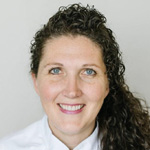
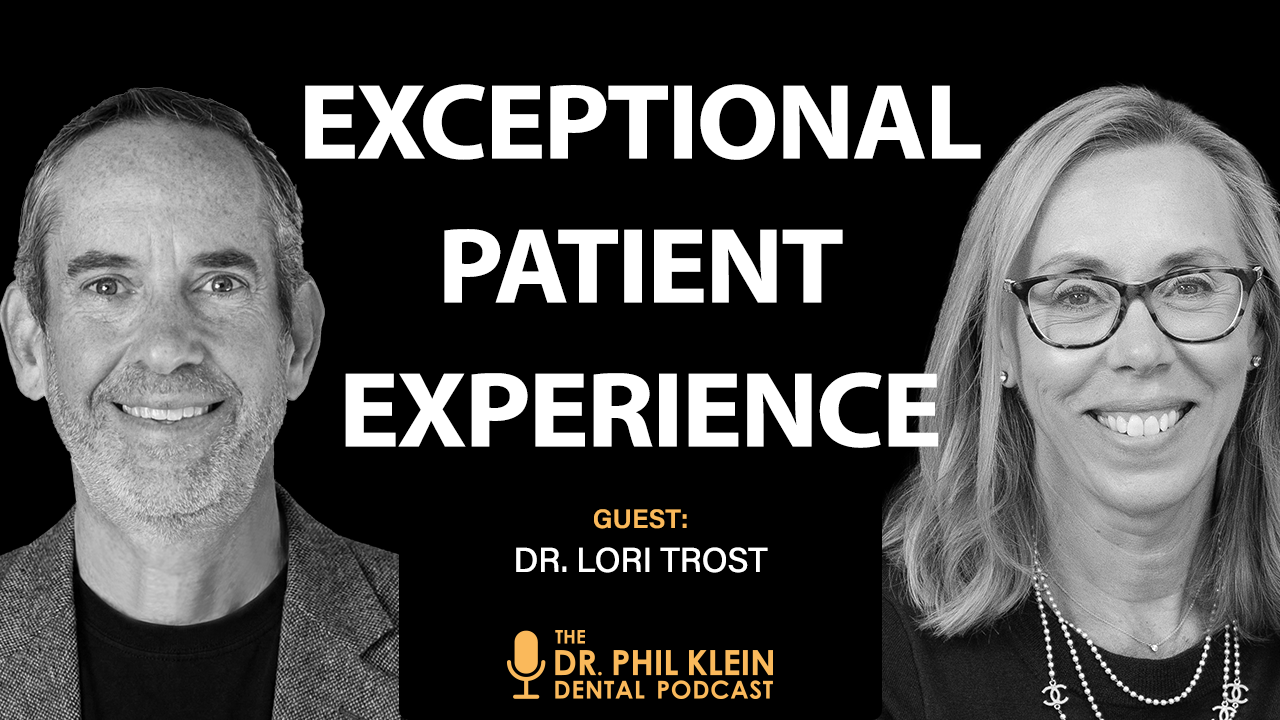
Dr. Lori Trost is a full-time clinician whose Columbia, Illinois practice centers on esthetic dentistry with a wellness-focused approach to patient care. A sought-after lecturer across North America, clinical evaluator for numerous dental manufacturers, and prolific author of professional dental articles, Dr. Trost is a member of the ADA, ASDA, and AGD, serves as a board member of the AACO, and is a recipient of the prestigious Shils Foundation Award from the ADA for Entrepreneurial Spirit and Leadership. She was also named one of the "Top 25 Women in Dentistry" by Dental Products Report. Her decades of clinical experience and her nationally acclaimed course on patient experience make her one of the most credible voices on this topic in dentistry today.
In this episode, Dr. Trost breaks down what it truly means to create an exceptional patient experience — and why so many practices, even those with veteran clinicians, are falling short. Drawing on the response to a standing-room-only lecture she delivered to over 1,000 attendees, she reveals the three pain points that resonated most deeply and explains how practices can address them systematically. This conversation is a candid, practical look at the cultural and operational gaps that quietly erode patient trust, retention, and referrals.
Episode Highlights:
- Research shows patients who wait more than 10 minutes in a reception area become disengaged, turn to their phones, and are significantly more likely to leave negative reviews. Software that tracks patient check-in time can help front desk teams intervene before frustration builds, and moving patients promptly is one of the simplest and most overlooked retention strategies in practice management.
- Only 35% of dental offices conduct a morning huddle, despite it being one of the most powerful tools for aligning a team before the clinical day begins. Practices that skip this daily communication ritual are more prone to in-office chaos, miscommunication between clinical and administrative staff, and patients who leave without understanding what happens next in their care.
- Patients who are not oriented to the value of their visit before they reach the front desk are more likely to question fees, dispute charges, and disengage from treatment planning. Building clear verbal handoffs between the operatory and the front desk — including scripted language to describe clinical findings like cracked teeth — is a trainable, systems-based solution that directly impacts case acceptance and perceived practice value.
- Phone distraction in the operatory is not just a behavioral nuisance — studies from major universities confirm that the mere presence of a phone reduces a patient's ability to retain health information. Practices that implement a phone-off policy during appointments report stronger patient engagement, fewer safety concerns during active procedures, and more meaningful clinical conversations.
- Leadership gaps are among the most commonly reported pain points in dental teams, yet many practice owners either avoid the leadership role or conflate being liked with being effective. Defining a clear leadership style early — including during the hiring process — and investing in leadership development through courses and reading reduces team dysfunction, lowers staff turnover, and creates a practice culture where doing excellent work is the norm rather than the exception.
Perfect for: General dentists, practice owners, dental office managers, treatment coordinators, and any clinical team member who wants to understand how practice culture and patient communication directly impact retention, referrals, and long-term practice success.
If you've ever lost a patient not because of your clinical work but because of how they felt walking out the door, this episode will show you exactly what to change.
Disclaimer
Viva Learning LLC sites offer content that include opinions, techniques, recommendations, etc. from a variety of writers and speakers that are not necessarily endorsed by Viva Learning LLC, its associates and sponsored Viva Affiliates. Viewers are responsible for verifying the validity, accuracy and relevance of all content before implementing any techniques, products or recommendations into their clinical setting. Viewers understand that Viva Learning LLC, its associates, writers, speakers and sponsored Viva Affiliates are not in any way responsible or liable for any adverse events that may occur (i.e., in a clinical setting or anywhere) based on any information disseminated from Viva Learning LLC sites, including all Viva Learning sites.
The copyrights and other rights to the slides and video contained in a webinar posted on this website are owned by the speaker, Viva Learning LLC, and/or the sponsor company and/or its subsidiaries worldwide. Viewers are only authorized to view the content of the webinar (live and archive) at this Website and are not permitted to screen capture, record and/or download any content displayed in this webinar. You may not make any part of this Website available as part of another web site whether by hyperlink framing on the Internet or otherwise.
The copyrights and other rights to the audio contained in a Viva Podcast are owned by Viva Learning LLC. Viewers are authorized to listen to the content of the podcast and are permitted to download any podcast for personal use only. You may not, however, make any part of this Website available as part of another web site whether by hyperlink framing on the Internet or otherwise.
By signing up for a free webinar and/or podcast you give Viva Learning LLC and/or its Viva Learning Affiliates permission to send you emails alerting you to future CE opportunities and e-learning content.
California State Dental Board Provider Statement
Viva Learning is a registered continuing education provider in the state of CA. Dental Board of CA Provider #RP 5747. Approved through 6/30/2026
Questions regarding our Conditions of Usage, Privacy Policy, or other policy related material can be directed to our support staff by clicking on the "Support" link or you can email us at: support@vivalearning.com.
Approval does not imply acceptance by any regulatory authority or AGD endorsement.
Approval period: 11/1/2025 - 10/31/2029. AGD Provider # 217544
Presenter Information: Dr. Lori Trost
 |
Dr. Lori Trost maintains a full time practice in Columbia, IL that focuses on esthetic dentistry with a wellness approach to patient care. She lectures extensively throughout North America, is a clinical evaluator for many dental manufacturers, and uses this opportunity to translate her knowledge and experience into authoring a wide variety of professional articles. On a daily basis she values her team members contribution to patient treatment success and continued professional passion. Dr. Trost is a member of the ADA, ASDA, and AGD; a board member of the AACO; and, has been honored as a Shils Foundation Award Recipient from the ADA for Entrepreneurial Spirit and Leadership. Most recently, Lori was named as one of the “Top 25 Women in Dentistry” by Dental Products Report for 2013. Her vision and approach to everyday clinical dentistry is informational, motivational, and refreshing. |
Viva Learning is an approved AGD PACE Provider and California State Dental Board Provider of dental continuing education. Viva Learning strives to deliver balanced, objective and clinically relevant information grounded on scientific research. Lecturers who are invited to deliver Viva CE webinars are advised to substantiate their claims with research-supported data and to disclose all commitments to, or relationships with, any commercial entity within the dental industry. In many cases, lecturers are sponsored by a dental manufacturing company, which provides them with support in the form of honorarium and/or dental products and equipment in order to help with clinical presentations. Prior to each live CE webinar, lecturers are made aware of the importance of delivering their presentations without commercial bias, and where appropriate, to mention a variety of different product choices that may be relevant to the subject matter of the lecture, for the educational benefit of the participant.
Transcript
understanding what the patient says and learning how to listen. We all need to learn how to listen
better. And we need to listen to learn. And that's a really, to me,
prominent focal point of this. And what I did is I built this program. I bring in and I set a lot
of sources that these are things maybe we've known or learned or heard, but never really all put
the dots together.
Welcome to Austin, Texas, and welcome to the Dr. Phil Klein Dental Podcast. In today's episode,
we're diving into a topic that can truly set your practice apart, creating the exceptional patient
experience. Joining us is Dr. Lori Trost, an accomplished clinician, educator,
and thought leader who's been teaching a highly acclaimed course on this very subject. Dr.
Trost believes that creating an exceptional patient experience isn't just about modern technology, it’s about clinical outcomes, consistency, and culture. In our conversation today, she breaks down the key elements that drive this experience, from the power of the morning huddle to reducing distractions in the operatory.
She'll also share actionable tips on improving patient communication and highlight the common pain
points many practices face, those hidden barriers that can unknowingly sabotage patient
satisfaction. So if you've ever wondered what it truly means to deliver a patient experience that
builds trust, loyalty, and long-term success, this episode is for you. Before we get started,
I'd like to thank all of you for tuning in. If you're enjoying the show, please follow us on Apple
Podcasts and Spotify, and even better, leave a review. By doing so, you're not only showing support
for what we do here, but your reviews are instrumental in getting more dental professionals to
listen and benefit from our content. We really do appreciate it. Dr. Trost, it's a pleasure to have
you on the show. Thank you, Phil. How are you? Very well. Thank you very much for asking. So in
this episode, we're going to be talking about something you strongly believe in. That's a very
important thing to master as a dentist, and that's creating the exceptional patient experience.
You have a course on it. You talk about it online. You do webinars on it.
So tell us what you mean by the exceptional patient experience, and we'll get into more detail on
some of the things we could do as dentists to make sure that happens. Yeah, so creating an
exceptional patient experience to me is near and dear to my heart. It's how we as an office,
dentists, front office, assistants, hygienists, whoever else is in that practice,
how we interface, how we build a relationship, how we gain trust, how we promote value, and
underscore just a path for that patient to always return and to refer and to really have a great
experience. You know, someone asked me a long time ago, why are you a dentist? And my answers
really never changed. It really focuses on, I want to make the experience for every patient better.
Because we've heard so many times, oh, I've had a horrible, you've heard the same thing. You hear
it all the time. Oh, that hurt me. That was terrible. You know, I don't ever, I haven't seen a
dentist in 13 years. You hear all of these different reasons. And to create an experience that's
different, it can be pain-free. It can be managed with storytelling, internal scanning. You can
use CBCTs.
fantastic diagnostic ability and just picture up front. That's all wonderful with technology, but
it has to come down to still being a person and having a connection, looking at eye level, looking
into their eyes and having touch points and really, really emotionally connecting with that patient
to show them that you're going to gain their confidence and trust and do great care for them. So
let me ask you this, Dr. Trost. In a recent lecture that you gave at a big meeting,
you had 600 people in the room and 400 people online listening to it on creating the exceptional
patient experience. Now, a lot of these dentists have been out there a while. They're not new to
the game. There were some, as we spoke about, some young dentists that are new, but most of them
were veterans or at least practicing five years. What's going on out there that they are so
interested, especially the way they approached you after the... class was over.
And we'll talk about that later with a lot of questions. What's going on out there where they feel
they really need to better understand this concept? Because it seems to me creating the exceptional
patient experience is an obvious thing when you own a dental practice. I mean, what's missing out
there where they feel they have to get this knowledge from people that lecture like you? I think
that many times we get so caught up in learning new procedures.
New materials. It's a very fast-paced world in materials.
New protocols. Just digital anything right now is going to take up time and space.
Our focus often veers from where it really is about the patient and really hearing and
understanding what the patient says and learning how to listen. We all need to learn how to listen
better. And we need to listen to learn. And that's a really,
to me, prominent focal point of this and what i did is i built this program to go in and it it can
talk and speak to something as simple as if you want to fix up your office what kind of paint
colors are more attractive to making comfortable a comfortable feel for that patient when they sit
in there what kind of team members do you want to have on board and how do you attract team members
because it's really good to have a best friend at work right That does attract.
Word of mouth is still the most powerful marketing agent, period. So I bring in and I said a lot of
sources that these are things maybe we've known or learned or heard, but never really all put the
dots together. Simple things like creating a beautiful front glass door when you walk in rather
than a stark white door or you want to have clear glass. You don't want to have mass glass because
people want to be able to look and see in. That makes a big difference. These are all very simple
things. Lighting. chair comfortability, seating comfortability? Do you have a weight policy in your
practice? Do you know, it's really interesting. I love Howard Fran, but years ago, I remember
sitting in a lecture of his and Howard's just got more energy, I think, than anyone I've ever met
in my life. And he was... about in 10 minutes you've got to move he's absolutely right and there's
now studies that show that and you at night what did he say what was his main 10 minutes you've got
to seek that patient you've got to move them out of the reception area you've got to move them
because if you do not and studies now prove they get antsy they get on their phones and you're
going to get a battery view and other things are just going to go down south and you become second
or third fiddle to them and these are all just again tips and tricks we all have software programs
now that when that patient initially comes in, you click them in, you know exactly the ticker and
how long they've been there. So the front desk needs to be painted attached. Yeah, I got to tell
you, I can't agree with that more. Before we continue, I've got to give a shout out to our sponsor,
NSK. These folks are the real deal. Their air and electric handpieces are not only top tier,
they're the highest rated in the industry, peer reviewed by Dental Product Shopper. Their Timex
Z99L electric handpiece actually scored the first ever perfect rating.
and the Timex Z990L is the most powerful handpiece on the market. So do yourself a favor.
Check out everything they offer at nskdental.com and take advantage of their free trial by
reaching out to your local NSK rep. I've heard this many times from many dentists. Once you start
using NSK handpieces, you'll never look back. I had an experience a couple of years ago with a
specialist. I waited 45 minutes past my appointment time and then was brought into the exam room
which was freezing, told to get into a very skimpy robe. That was also a room that was freezing.
And I waited there for over 15 minutes. So it's an hour total, completely uncomfortable because of
the chill. And that was it. Like I had the appointment. I mentioned to the doctor that it was a
really long wait. He didn't apologize, never went back. I didn't write a bad review, but I just
never went back, found another doctor. So that certainly has a major effect on the patient
experience for sure, the wait time. So I think Dr. Ferran is 100% right there and so are you. One
of the things that's most important to me when it comes to the first experience, and tell me what
your thought is on this, is the genuineness of the provider, the person who I'm talking to in that
first visit. Like you said, listening is very important, but I really want to know that they
genuinely care. And I'm not there just as another patient where they can bill something and collect
money. And that has to do with the interaction, the questions that they ask,
whether they're taking notes on things I'm saying. And then, of course, the follow-up questions
that they might ask related to what I said is a good indicator of whether they're listening and
looking to dig deeper to solve any issues. When I have a medical provider or a dental provider that
does that, that's a great start. Is that what you're finding as well? I'm going to use an example I
had yesterday. So I had a new patient come in yesterday and we're able to complete everything on
him. He had actually a very healthy mouth. And when I set him up and the first question I always
ask too, I agree to patient always when they're seated, I sit down, I look at them.
I either shake their hand or sometimes I can tell they don't want to do that maybe, or I just touch
them in a way. And I just want to make that connection and make that happen. And long story short.
got everything completed, exam, everything, set him up. And the first thing he said was, I'm really
glad you didn't sell me anything today. He goes, you're not that kind of dentist, are you? He could
tell. And my first question to him was, how can I help you? And from there,
that's just a very open-ended question. It's a very simple question, but it matters tremendously
because you get a... quickly, broad idea of experience, what they've come baggage.
You hear stories. I get many patients on second, third opinions, and I can learn to quickly steer
my conversation and what I want to gain in confidence with them and build their trust. But that was
a prime example of that. And then I'm able to storytell and show him all the information we're able
to do, enteral scan. It's amazing how that unfolds. And I think before you know it,
he was so wowed. And then the thing wasn't about selling. It was about this is your care. And
again, we place treatment. I don't like the word treatment at all. We say care. And I think that's
a very big switch out, which is very practical. That's interesting. semantics change there.
Yeah. Yeah. I actually had dinner with a friend of mine a few nights ago. He said he went to the
dentist, knowing I'm a dentist. And he said, my teeth are perfect, Phil. Every time I go to my
dentist, which is twice a year, they find something. They always find something. Yeah,
we don't really need to do this, but I would recommend it. This is what it's going to cost.
Somebody's going to come in and the business person's going to come in and talk to you about the
cost. Your insurance covers most of it. They immediately would go to that. It was like they were
looking. for something to sell my friend. And he said, it doesn't matter.
Every time I go there, it's like, why didn't you say anything last time? This is new stuff. So he's
looking for another dentist. But what you're saying is totally the case. So it's that listening to
the patient and getting that trust in the beginning. So I want to pivot for a second back to the
seminar you gave recently at a major meeting where you had hundreds of people in the auditorium.
And after the... was over, you had quite a number of people that came up to you that asked you
questions and they wanted more information about some of the things you said during that lecture,
which I found very interesting. How long was that lecture? An hour and a half. Hour and a half.
Okay. So tell us about what happened at the end of that lecture and how it helped you understand
what to focus on as you develop that program. Yes. So some of the...
I do bring up pain points and how we can all improve and have points of action, call to action that
we can really, I believe if I want to go hear somebody give me and spiel out some things,
let's walk your talk. What are you doing to make it easier? What are you doing to make it better?
For me, a morning huddle is a very massive communication, get everybody on the scene.
You know, I analogize it to, can you imagine an NFL team going out on the field and you don't even
have a coach or you don't have a meeting or a locker room gathering. You just say, show up and you
get out there. I mean, it's ridiculous. And I think many times what happens is there's a scrambling
and then that leads to more chaos, which we know dental offices are filled with chaos and
distraction, right? So the morning huddle, was that a pain point for the people that were talking?
Only 35% of offices do a morning huddle. Wow. And so my thing is,
and I do believe I shared this with you in the past, but after every program that I give,
I like to list three items that I take away. What do people come up to me and talk to me about or
ask me about later on or want to have further exploration, further understand? And three things
stood out in this program that to me was a very simple. things, but they're actually very important
things. So one is the lack of leadership. So let's go back to the morning huddle. If you're not
leading your team, who knows where you're going? And that was very evident. I had several people
ask, can you give me your morning huddle protocol? What do you do? And I do display that, but they
wanted to see that again, me specifically send that to them. So they had that to give to their
dentist. The second item was the need for improved communication. And that does,
again, go a little bit with the morning huddle, but the communication is relaying up to the front
desk. It's up to through the next appointments. What is the next visit about? So many patients
leave a practice and they have no idea what's next. Now, these pain points that they're talking to
you about at the end of the lecture, did you cover these in the lecture or these are things they
want? I did, but they wanted to dive in deeper and they wanted to look more. And in 90 minutes,
you're really limited, honestly, on how much. I mean, a lot of times this is a half a day program.
It can go up to an all day program. But I really dive very deeply in how you overcome a lot of
these and improve on these. So when you say communication, you're talking about communication to
the patient so they understand what the next step is. Yes. Scripting, verbiage. How do you describe
a cracked tooth? Simple things like that. You and I might take for granted. We've been doing it for
a long time. But when you have a revolving workforce, when you have new team members, when you have
people who've never been in dentistry, they don't understand the dynamics. They don't understand
what drives the emotion. And the more descriptive we can be and the more on the same page,
very important. Yeah, it's really unfortunate when the patient leaves the operatory, goes to the
front desk, is asked to pay a bill. like a copay, and they're not even sure what just happened in
the operatory. So the communication just was poor and the patient doesn't understand.
They're paying for something. They're not sure what the next step is. And there's just a lack of
satisfaction on that patient's part. And it's certainly not going to encourage them to come back.
Do you think this is happening far too often in a practice? Absolutely. And really what you're
describing there, and it happens so often, is there's no value built in to that entire experience.
Zero. Zero. And because of that, then people do get upset.
They don't pay their bill. They question what you charge. They question what you're doing. They
question your validity. They question your expertise. That comes from lack of leadership somewhere
along the line, right? Yes. Right. So the practice owner who's hiring the team,
needs to make sure that universal minimum as far as communication,
right? There has to be some level where we can't go below this. When this patient leaves, this must
be accomplished when that patient leaves. And there's certain maybe templates of verbiage that
could be implemented. Okay, that's a good pain point. What are some others? We'll be right back
with our guest. But first, I want to tell you about VOCO's newest composite, Grandioso for You.
Top clinicians are calling it the most tooth-like universal composite ever made. Unlike
traditional composites that force you to choose between either an anterior aesthetic composite,
a stronger layering posterior composite, or a fast but aesthetic compromising bulk fill,
Grandioso 4U does it all, simplifying your workflow while delivering superior results in a single
material. It cures 4mm in just 10 seconds, looks stunning with 5 cluster shades covering all 16
Vita shades, and handles like a dream with 50% less resin. It's a 91% filled nano hybrid,
giving you tooth-like strength, ultra-low shrinkage, exceptional wear resistance, and an amalgam
-like high radio opacity. So as they say, seeing is believing. So grab your free sample of
Grandioso for you today at voco.dental. The other takeaway was how offices are running on fumes.
And the understaffing is very real right now. The lack of experience is very real.
Hard to find a work force that stays consistent and is true. And again,
if you have all this lack of communication or lack of mentorship.
you're steering a ship, you're running around, you're herding cats, it's not working. And then look
at the distractions that happen with patients. So one of the simple things that we do in our
practice, we ask that patients turn off their phone. And we kind of joke about this, but we blame
it on me because I don't want to have a high-speed handpiece, you know, running at, you know, 250
,000 RPMs and you hold it up there and they're looking at their phone while you're prepping number
19 and the tongue is in the cheek and the way, and you know how that goes. What's interesting is if
the phone is present, there's some great studies out. University of West Virginia has a great one
out. But literally, the patient will pay more attention to that phone than listening to what you're
going to tell them about their health. So again, how do you create value? Let's turn off your phone
because your phone scares Dr. Trost when it rings. That's what we say. Really, it's about... out
the distraction, building the relationship, creating the value, having fun with the patient, making
it an experience of care, not just treatment, and going from there. Right. And if you're putting
the effort into making it an experience of care, and they're being distracted by something,
it's mitigating your efforts. And you only have so much time to be with that patient, and you want
it to be as effective as possible. And so you want that phone off. And I totally agree.
Listen. For my generation, when my family gets together, I have a son and a daughter, and we're my
wife, and we're sitting at the table for dinner. Whether we're out at a restaurant or at home,
phones are off the table. No pun intended. Off the table. Yeah. And some people may not agree with
that. But to have one of my kids looking at their phone while we're eating out at a restaurant, and
we don't see each other together that much because my kids are grown, doesn't make any sense. So I
think that's a great policy. Now, you mentioned that some of the questions that were being asked of
you at the end of the lecture, they wanted to do it without their particular boss there,
for instance. And then the dentist owner wanted to ask you the question without their staff
present. Tell us about that, because I found that very interesting. i do i find that very
interesting some of them waited till uh they were gone and they were obviously somebody comments
team some always usually offices you know the practice tend to sit together right but it was
interesting how some would lean in and be kind of quiet some of them were talking about you know
how do i deal with a queen bee in the office you know so i kind of gave them suggestions on that
because I'd rather have an umbrella style practice rather than a pyramid with someone sitting up
there being the prima donna. So I gave some strategies on those issues. I had a lot of team members
just say about how their dentist doesn't want to be a leader. They were so busy, they don't know
how to start. And I think this is where... sit down and really take hold of a conversation and,
hey, we want you to lead us. We want you to be, we want to look to you as our source and we believe
in you. And I know there's sometimes two new grads too. I mean, getting your stride, you know,
getting your confidence. There's a lot of, dentistry is so emotional, but we have to think about
who takes care of us and who we work with every day. And we've got to be really good to those team
members. Now, what do you say to a dentist? who says, I want to be a leader,
but I want to be liked. I don't want to be somebody that is issuing orders and mandates and rules,
and I'm always on top of people to do certain things. I want to be popular. I want to be liked.
Because I talked to a dentist like that, and he said, how do I be a really effective leader and
also be popular among the staff? Because we work together, and it's like a big family. But it can
be very detrimental to the practice, as you say, if that... owner is not a really good leader.
So how do you balance that? I think that you have to make sure there's hard decisions sometimes.
I'm going to say that. I've had to make some hard decisions. I would rather in the long term be
respected than liked. Yeah, I mean, it's certainly more effective to run a practice that way.
It is. And there's times where I cannot be just, I'm not a friend. I'm your boss,
your employer. I'm in your camp there. I just think it's human nature sometimes for people to take
advantage of a person who is their boss if they act like they're good friends.
I think, you know, Dr. Smith, he's not going to care. I'm going to come in a half hour late. I was
out late last night. He's not going to care. He's cool. And that's great. But he does care.
But he just wants to be liked and popular. And then. People start, it's just human nature. People
start taking advantage of that. It seems to me the best way to handle the employer-employee
relationship is early on, like maybe in the first interview, just to establish how this practice
works. Do you agree? I think you have to show that you're a strong leader.
And I think, you know, if you feel that you're lacking in skills on this and everyone has their
different leadership style, okay, read books on it. There's a lot of great information out there.
Take some classes. It's simple and easy, but figure out what your leadership style is, bring that
into the practice and create a great team. We want to be able to have fun at work.
And when it's fun, it's not work, right? And we're enjoying each other. We're going to do better
work. We're going to do better care. Our patients are going to have a better experience. It just
really snowballs into a wonderful time. And I think it's hard to figure out,
hey, where's our strengths and weaknesses? But sometimes, and that's a lot of this too, you've got
to figure that out. And that conversation with a lot of those people that stayed afterwards, they
wanted to know those questions are really tough. The other thing that I had a lot of question about
was bad reviews. Well, bad reviews are tough, too, and some strategies on how to deal with that as
well. But I can tell you, again, just managing everything from start to finish,
leadership, improved communication, reduce your distractions, you're going to cut down chaos,
you're going to get better reviews. Isn't dentistry such a challenging profession when you think
about it? You have your own business, and you have to learn all the clinical stuff. You have to
know how to manage people, HR. I mean... understand now that the DSOs are getting more popular.
Some dentists are just like, I'm ready to join a DSO. You know, I'm not the leadership type.
What's that? It's very multifaceted. Yeah, it's very multifaceted and you have to. I love the way
you say if you don't feel comfortable being a leader, read a book on it. And that's really a good
answer because the information is out there. Depending on your personality, there's a way to become
a leader where you can do it. Yes. Yeah. And that's the attitude. Most of the things that we feel
we can't do are basically self-imposed limitations. So I know you have a webinar.
You really packed a day today. You did a bunch of stuff with us and now you have a webinar with a
laboratory and you probably practiced all day too. No, I did not. All right.
Yeah. Not today. You certainly squeezed a lot of education or digital education in this evening.
So we're going to let you go a little bit earlier, but amazing stuff. Dr. Trost, we're going to
follow up on this further on creating the exceptional patient experience because that's way more
important than I think a lot of dentists realize. And your closing thoughts on that, how important
is the, especially the initial experience when that patient first comes to the practice and then
tell us how important it is to maintain that, to keep that patient? You know, there's an adage out
there about they're going to remember how you care. They're going to remember how you care. How you
care. That's what you want. It's not about the procedure. It's not about the anesthetic.
It's not about the bonding agent, the curing light, the extraction, the periodontal scaling. Not
that. It's about how you made them feel. And there's an adage also about people don't remember what
you say. They remember how you make them feel. And you're familiar with that one, I assume.
Yes. That's so consistent with this. Yes. There's a certain psychology to this. We need to get
Sigmund Freud back from, he was the one that was behind all this stuff. All right. Well, listen,
thank you so much, Dr. Trost. We'll see you soon. And we're looking forward to doing more webinars
and podcasts with us. You're one of our favorites. Thank you so much, always great to have these conversations with you, Phil.
 Episode 806. It Starts With Leadership: Creating the Exceptional Patient Experience
9/24/2026 - CE Credits: 0.5 CEU (Take Exam)
Episode 804. What You Believe Is What You Build: Breaking Free from Corporate Dentistry
9/17/2026 - CE Credits: 0.5 CEU (Take Exam)
Episode 802. Scaling Up: The New Era of Dental Hygiene with Katrina Klein
9/10/2026 - CE Credits: 0.5 CEU (Take Exam)
Episode 800. Dropping Insurance? Buying a Practice? Your Marketing Matters More Than Ever
9/3/2026 - CE Credits: 0.5 CEU (Take Exam)
Episode 798. From GP to Perio Practice: Expanding Your Role as a Dental Hygienist
8/27/2026 - CE Credits: 0.5 CEU (Take Exam)