







| Dental Podcast Episode - The Dr. Phil Klein Dental Podcast | Listen on: |

|

|

|

|
and others. |
Episode 624: Oral HPV Testing: A New Dental Approach to an Old Problem
 |
Disclaimer
Viva Learning LLC sites offer content that include opinions, techniques, recommendations, etc. from a variety of writers and speakers that are not necessarily endorsed by Viva Learning LLC, its associates and sponsored Viva Affiliates. Viewers are responsible for verifying the validity, accuracy and relevance of all content before implementing any techniques, products or recommendations into their clinical setting. Viewers understand that Viva Learning LLC, its associates, writers, speakers and sponsored Viva Affiliates are not in any way responsible or liable for any adverse events that may occur (i.e., in a clinical setting or anywhere) based on any information disseminated from Viva Learning LLC sites, including all Viva Learning sites.
The copyrights and other rights to the slides and video contained in a webinar posted on this website are owned by the speaker, Viva Learning LLC, and/or the sponsor company and/or its subsidiaries worldwide. Viewers are only authorized to view the content of the webinar (live and archive) at this Website and are not permitted to screen capture, record and/or download any content displayed in this webinar. You may not make any part of this Website available as part of another web site whether by hyperlink framing on the Internet or otherwise.
The copyrights and other rights to the audio contained in a Viva Podcast are owned by Viva Learning LLC. Viewers are authorized to listen to the content of the podcast and are permitted to download any podcast for personal use only. You may not, however, make any part of this Website available as part of another web site whether by hyperlink framing on the Internet or otherwise.
By signing up for a free webinar and/or podcast you give Viva Learning LLC and/or its Viva Learning Affiliates permission to send you emails alerting you to future CE opportunities and e-learning content.
California State Dental Board Provider Statement
Viva Learning is a registered continuing education provider in the state of CA. Dental Board of CA Provider #RP 5747. Approved through 6/30/2026
Questions regarding our Conditions of Usage, Privacy Policy, or other policy related material can be directed to our support staff by clicking on the "Support" link or you can email us at: support@vivalearning.com.
Approval does not imply acceptance by any regulatory authority or AGD endorsement.
Approval period: 11/1/2025 - 10/31/2029. AGD Provider # 217544
Presenter Information: Dr. Mohammad Kamal
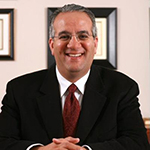 |
Dr Kamal completed his Pathology training at Harbor UCLA Medical Center in California, serving as a chief resident. He completed subspecialty fellowship training in Gastrointestinal and Liver Pathology at UCLA and he is board certified in Anatomic Pathology. Dr. Kamal served as Medical Director of LabCorp’s Dianon Laboratory and as Chief Medical Officer for PLUS Diagnostics. |
Viva Learning is an approved AGD PACE Provider and California State Dental Board Provider of dental continuing education. Viva Learning strives to deliver balanced, objective and clinically relevant information grounded on scientific research. Lecturers who are invited to deliver Viva CE webinars are advised to substantiate their claims with research-supported data and to disclose all commitments to, or relationships with, any commercial entity within the dental industry. In many cases, lecturers are sponsored by a dental manufacturing company, which provides them with support in the form of honorarium and/or dental products and equipment in order to help with clinical presentations. Prior to each live CE webinar, lecturers are made aware of the importance of delivering their presentations without commercial bias, and where appropriate, to mention a variety of different product choices that may be relevant to the subject matter of the lecture, for the educational benefit of the participant.
Transcript
it just means that we are going to put you on a follow-up track that would allow us to,
God forbid, detect an early lesion so you don't come back with cancer in five years and completely
get blindsided by it. Welcome to the Phil Klein Dental Podcast. In this episode,
we'll be talking about a new dental approach to an old problem, and that's oral human
papillomavirus, commonly referred to as HPV. So why is this virus so dangerous,
and how can we as dental professionals help save lives by screening for it? To answer these
questions and more is our guest, Dr. Mohammad Kamal, founder and CEO of Omni Pathology Laboratory.
Dr. Kamal is a medical pathologist who completed his pathology training at Harbor UCLA Medical
Center in California, serving as a chief resident. He completed subspecialty fellowship training in
gastrointestinal and liver pathology at UCLA, and he is board certified in anatomic pathology.
Dr. Kamal has extensive experience in managing large national pathology laboratories, having served
as medical director of LabCorp's Dianon Laboratory and as chief medical officer for Plus
Diagnostics. Dr. Kamal will be joining us in a moment, but first, are you looking for an air
-driven handpiece that rivals the power and torque of electric? Well, I have good news. It's
finally here. It's called the TMAC-Z and it's from NSK, a company we all know and trust as a world
leader in dental handpieces. In addition to being lightweight and ergonomic, this revolutionary air
-driven handpiece delivers unprecedented 44 watts of power, allowing it to cut through tough
zirconia smoothly and quickly. In fact, the TMAC-Z reduces overall cutting time by 30%.
That means less chair time, reducing the burden on you and your patient. Take a test drive of the
TMAC-Z air-driven handpiece from NSK. For a free 10-day trial, go to nskdental.com and find
your local rep to inquire. Experience the power and excitement of the TMAX Z series.
Dr. Kamal, thanks for joining us. Thank you, Phil, for having me. So to begin, briefly talk about
oral HPV, its prevalence, and its potential danger if not detected.
HPV is the most common sexually transmitted disease in the United States. It's the most common
sexually transmitted infection. in the United States. It affects both men and women,
but more men than women. HPV causes oropharyngeal cancer.
In the past, most cases of oropharyngeal cancer were caused by smoking and they were not HPV
related. And gradually over the past 20 to 30 years, the rate of HPV related oropharyngeal cancer
started to increase and it surpassed. the non-HPV-related one. And in fact,
today in the United States, you have more men with HPV-related throat cancer than women with HPV
-related cervical cancer because cervical cancer incidents have been declining. You talked about on
another podcast on this topic with Viva Learning and our show that the reason for that is that the
cervical part of HPV-related cancers are tended to with much more follow-up and treatment.
than the one that occurs in the throat. And that's what we want to get into. If we could engage
dentists to intervene early, we could change that trend. Yes. So because we have well-established
guidelines for follow-up and cervical cancer, we started to see that when a woman goes for her
annual... smear examination and that sample is tested for HPV and tested for other things.
When she's positive for HPV, high risk HPV, then there are certain steps that happen.
There's a colposcopy. They look in the cervical canal and they identify any abnormality and they
biopsy anything that looks unusual. And there are known steps to get the lesion before it becomes
cancer. So typically a dentist will do a oral cancer screening exam and they'll palpate around,
they'll look visually, they'll use some devices that rely on fluorescence and so forth that can
detect dysplastic tissue because that shows up darker. There's a number of various ways that
dentists look in the mouth and examine the mouth for that oral cancer screening. But tell us about
your test, Dr. Kamal, specifically that concerns the oral pharyngeal tissue and the tonsillar area,
much related to HPV, which again is so closely tied to oral pharyngeal cancer.
So our test is a PCR test for HPV performed on a swab of the oropharynx.
There are over 100 types of HPV and they are divided into high risk and low risk.
We focus on the high-risk HPV types, and of course, they're known as high-risk because these are
the ones that are linked to the development of cancer. So we test for 14 subtypes of HPV.
The vast majority of HPV, of oropharyngeal HPV cancer, are caused by HPV-16.
So we have in our report, we have a result for HPV-16, a separate result for HPV-18.
And then the third result is for what we call other, which is the other 12 high risk types.
And since we started testing, we have been getting a lot of HPV-16 positive. And we have a couple
of cases of 18 and then a couple of cases of other. So what we do is that it's a PCR test,
just like COVID test. You swap the oropharynx. and you send it to the lab. The reason we are
advocating for that test is because we are dealing with an HPV-related cancer that is rising.
We know that HPV resolves on its own, but persistent HPV is linked to cancer development.
The other thing that we know is that visually, you can never tell an HPV positive from an HPV
negative. They all look the same. When somebody is positive for HIV, there are no lesions that you
can identify. So because of that, we think that there's an opportunity for us. When the patient is
at the dentist, they have their mouth open, the throat is right there available,
that we swab the oropharynx and submit it for HIV testing so that we can identify the patients who
are... positive. Now, how are you going to identify patients with persistent HPV infection if you
don't test for HPV? You have to test for HPV, and then you will be able to identify those patients
because those are the ones that you will send for ENT follow-up. What do you say to the dentist
that says, well, almost everyone has HPV, so why am I doing this test? Oh, great point.
So they say that, and they also say it resolves on its own, right? So I tell them, well...
the same thing in the cervical canal, and nobody's making any argument that we shouldn't be testing
pap smears for HPV. So the thing is, we know that if it's there,
it doesn't mean that the patient has cancer. But if it's persistent, then it means that this
patient is at risk of developing cancer. So the determination of being persistent. is the key to
the laboratory test. That must be a fairly recent advancement in being able to identify an HPV
that's persistent. Or is it not an advancement? It's just saying it's there. I think the
advancement is the availability of the test because before we start, we're not aware of anyone
who's doing HPV testing on the oropharynx. I think that this is the advancement. But also,
the advancement would be... change of the practices where people can really educate.
Our job is to educate each other and educate our patients. By educating the patients and letting
them know that testing positive is not a reason to panic. It just means that we are going to put
you on a follow-up track that would allow us to, God forbid, detect an early lesion so you don't
come back with cancer in five years, completely get blindsided by it. So we're being proactive.
Right. Now, what percentage of the population has been exposed to HPV? And what percentage of the
population do you think would show persistent HPV? I think 82% of HPV-related oropharyngeal
cancer is in men and 18% is seen in women. But the actual oropharyngeal HPV data is not there
because nobody is testing in the oropharynx. So we really don't know out of the entire population
pool. You have all these patients coming into the dental office. We know that a lot of people have
been exposed to HPV, but we don't know what to expect. If the patient says,
well, I understand this test is for persistent HPV after you explain it to them. And that's the
risk when you have persistent HPV. That's the risk toward getting throat cancer. But the doctor,
if he's asked, if he or she is asked, what are the odds that mine's going to come back persistent?
There's really no answer to that yet. Right. And the persistency is determined by the repeat
testing. Meaning that nobody's going to get first time testing and then they come back and they say
you have persistent HPV. The result will say HPV infection. And then in six or 12 months,
they get retested. If they're positive again, then we can worry about them being persistent, of
course. And if it lasts more than two years, then it's definitely persistent. Right. So if you have
been exposed to HPV, then you could get a test back that says negative, even if you've been exposed
to it, because it's your body's controlling it to the point where the test will. shown negative. Is
that the case? Yes. Yes. And that self-limiting feature or it being resolving on its own is not
uncommon to the oropharynx. This is the nature of HPV infection in general. Okay.
So this is a tremendous way to screen for this persistent HPV because if we see a patient that has
this ongoing... ongoing case of HPV where this virus is active,
then the ENT person could then go in and examine this patient where they could possibly see a
precursor lesion. Exactly, exactly. And the precursor lesion is equivalent to the polyp in the
colon and the small lump in the breast and any other lesion that you detect with a screening.
We'll be right back with our discussion with Dr. Kamal in a moment, but first, as dental
professionals, we want our crowns and bridges to be strong and beautiful, but it seems we've always
had to sacrifice one for the other, until now. With prime zirconia, you get a revolutionary
material that provides the strength for splints and bridges, and the superior aesthetics and
translucency for anterior cases. Prime Zirconia Discs are made with a state-of-the-art gradient
technology that creates Y3 strength where it's needed, as well as Y5 translucency for aesthetics.
So thanks to Ivoclar, you can finally choose a material that offers the strength of zirconia and
the aesthetics of lithium disilicate. That's why top clinicians around the world are prescribing
Prime Zirconia to their labs. Your patients will be thrilled, and so will you. To learn more,
visit Ivoclar.com, or to locate a lab near you, Check out the link in the description. Yeah,
just by sending the patient over to the ENT and doing these endoscopy procedures, and I know
they're not inexpensive, and I know that the goal is to keep healthcare costs down, and some
doctors have different feelings about this than others. You know, some prefer to minimize the
amount of... invasive procedures. I wouldn't call endoscopy an invasive procedure, but it still
requires some form of general anesthesia or twilight, right? I mean, the patient has to be put to
sleep to some extent for that. So there's some complexity to that kind of diagnostic procedure,
and it's not inexpensive. But if you see persistent HPV, you think that the risk is there,
and it's something that you absolutely believe there should be a follow-up. just as there is at
the gynecologist, which has proven to really reverse the trend of cervical cancer and so forth.
Right. And I also want to say something about testing. So I can take the cost of testing and
retesting and the cost of an office visit with an ENT doctor and add to it an office for a charge
for an endoscopy. And I would tell you, put that amount versus...
In studies, one of the studies said it's $140,000 of cost for treatment over two years,
not counting lost wages for the patient because of their illness and their being away from work.
$140,000. All of what I have mentioned as far as the testing and retesting and the office visit
for the ENT, nothing compared to that amount. So even the cost effectiveness makes another argument
in favor of testing. As I mentioned in a previous podcast that we did, Dr. Kamal,
I think it's a tremendous practice builder to do this. I think that the dentist that takes the time
and explains to the patient that this test is important makes it very clear to the patient how well
-versed that doctor is, that dentist is on overall health and how within this opportunity,
within this visit, they have the opportunity. to actually intervene and try to catch something that
could be so dangerous and life-threatening that's on the rise. I mean, it's not something that's
some rare thing that's happening out there. We have data that shows throat cancer is seriously on
the rise. So it is more important than ever, and I'm sure that's part of the reason why you're out
there educating dentists on this all day long. which I think is the right thing to do. Tell me
about the sensitivity and specificity of your particular test. Is there a chance where they get a
false positive or false negative on the swab? That's a great question. So we did our clinical
validation of the test. We actually took the exact same assay. That is FDA approved for the
cervical HPV test. And we validated it in our lab for the oropharyngeal sample. And we came with a
sensitivity of 95.2% and a specificity of 100%. Now,
every test has a chance of false positive and false negative. This is the nature of laboratory
testing. And the cause of this false positive, the causes vary from one.
and to a spectrum to another one. But in general, these numbers,
as far as clinical validation, they are extremely strong. I wanted to just go back to something
that you mentioned about the practice builder. And this is something very personal to me.
You know, pathologists are not facing patients. The vast majority of pathologists do not see
patients. One reason I started my own lab is because I had a vision about and a philosophy about
the practice of pathology. And I have always felt that it is easy for a pathologist who does not
see the patient to get somewhat detached from this entire encounter. So what I wanted to do is to
have a philosophy of being a patient advocate. I think healthcare providers collectively are on one
team. Number one goal for that team should be advocating for patients and looking for things that
benefit the patients. And for us to see a cancer that is rising and nothing is being done about it
really behooves. to kind of really collectively find a way to maximize the benefit of that clinical
encounter. Yeah, very well said, Dr. Kamal. I can't agree with you more. We take that oath.
We're healthcare providers and we're more than just tooth doctors. And again, wellness, the whole
wellness concept and culture is getting more and more profound in the dental community,
the professional dental community. And dentists are talking about it at trade shows. They're
reading articles about it. And it's something that has been proven now that there's a very, very
strong connection between oral health and systemic health. And this is a perfect example of how the
doctor should take advantage of, as you say, an opportunity that could actually make a huge
difference. And that goes along with what you just said about being an advocate for the patient.
There's no question about it. And I think it's a win for everybody. Absolutely, a win for
everybody. And hats off to you for having the facility and the testing capability to identify
persistent HPV. And I really encourage our listeners just to go to the website and check it out if
you're even curious, which I think every dentist should be. Even dental hygienists should check it
out and dental assistants and tell their dentists about it. It's omnipathology.com.
The name of the lab is Omni Pathology Laboratory, and Dr. Kamal has some videos there and other
information that helps us understand the process of doing the swab, how quick it is,
and it's just a very, very important thing. I'm very happy and excited to be able to do a podcast
with you, Dr. Kamal, on this whole topic, as important as it is. Well, I want to thank you and
congratulate you on this tremendous success in educating your community. And I hope one day I could
do the same for my pathology community. But again, I just feel that as a healthcare provider,
we have a responsibility. And I think it would be really an amazing legacy for all of us to take
part in fighting this rising cancer. Amen to that. Thank you so much, Dr. Kamal. And look forward
to having you on more programs in the future. Thank you. Thank you. Look forward to it too. Thank
you. If you've been enjoying our podcast, we'd love to hear your thoughts and feedback by leaving a
review on your favorite podcast platform, whether it's Spotify, Apple, Google, or any other
platform you listen on. Leaving a review is a fantastic way to support us and help others discover
our show. Thanks for listening. See you next time.
 Episode 804. What You Believe Is What You Build: Breaking Free from Corporate Dentistry
9/17/2026 - CE Credits: 0.5 CEU (Take Exam)
Episode 802. Scaling Up: The New Era of Dental Hygiene with Katrina Klein
9/10/2026 - CE Credits: 0.5 CEU (Take Exam)
Episode 800. Dropping Insurance? Buying a Practice? Your Marketing Matters More Than Ever
9/3/2026 - CE Credits: 0.5 CEU (Take Exam)
Episode 798. From GP to Perio Practice: Expanding Your Role as a Dental Hygienist
8/27/2026 - CE Credits: 0.5 CEU (Take Exam)
Episode 796. Why Dental Implant Disease Moves Faster—and What You Can Do About It
8/20/2026 - CE Credits: 0.5 CEU (Take Exam)