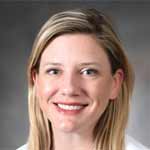
Oral cancer is a serious and often deadly condition that affects thousands of people every year. And although we know that early detection is the most important factor in achieving a successful outcome, many dental professionals may not be screening patients as regularly as they should and taking biopsies appropriately. Today, we'll explore why these screenings are so important, when to do them, who should get them, and what signs to look out for. Joining us is Dr. Ashley Clark, a board-certified oral pathologist currently serving as the Vice President of CAMP Laboratory.
You're listening to the Phil Klein Dental Podcast.
Oral cancer is a serious and often deadly condition. It affects thousands of people every year.
And although we know that early detection is the most important factor in achieving a successful
outcome, many dental professionals may not be screening patients as regularly as they should and
taking biopsies appropriately. In this episode, we'll be talking about why these screenings are so
important, when to do them, who should get them, and what signs to look out for.
Joining us is Dr. Ashley Clark, a board-certified oral pathologist, currently serving as the vice
president of CAMP Laboratory after a nearly decade-long career in academia.
She's on the professional board for oral cancer cause and digital dental notes. Dr. Clark has won
several teaching awards, has provided over 200 CE courses, and has authored more than 50
publications and book chapters. Dr. Clark, it's an honor and pleasure to have you on the show. Hi,
thanks for having me again. Good to see you. Yeah, good to see you. And congratulations on the
amazing attendance you've been getting on Viva Learning webinars. Thank you. I appreciate people
coming and learning about how to... and catch cancer in their patients.
It's really helpful to the public. Absolutely. So important. And I think you got over 1,500 on
your last webinar that actually started and finished the whole thing. Amazing. There were 2,800
that signed up, but I think about 1,500 or so showed up to the live one.
So it was really nice. Plus, then you get a lot of robust questions too. And we want to thank Perel
for sponsoring all this. This is an important topic, which is in alignment with your webinar.
But to begin, let's talk about the nomenclature that's recently been changed slightly by WHO.
And it has to do with what we typically call potentially malignant conditions. Now they're calling
it potentially malignant disorders. Tell us what that means and what's the purpose of the change.
Sure. So I'm very intentional when I use potentially malignant disorder or potentially malignant
condition in my talks, because that's what the WHO's nomenclature is now.
And what it used to be was pre-malignant or pre-cancer.
And so I think when we were in school and hygiene and dental schools, we were learning about pre
-cancers.
The WHO's thought was, well, not all of these necessarily turn into cancer,
but they all have potential to. So they changed the nomenclature. Usually when I do my CEs,
my continuing education courses, I'll explain the change and then I'll say, but as long as the
audience, you know, you and I. understand they don't all turn into cancer. I'm just going to say
pre-cancer because it's one word. So, but when I give talks, I like to introduce that nomenclature
just because if you're going to go into the literature and read anything about pre-cancers, you're
going to need to look up potentially malignant disorder in order to find anything. And that's going
to be the terminology that is going to be used going forward in the dental schools, in the
postgraduate programs and mythology or? In the literature it is for sure. All right. But I don't
know, you know, sometimes schools don't really catch up or they don't like the changes.
Like for the big example I'm thinking of is when the WHO in 2005 changed an odontogenic keratocyst
to a keratocystic odontogenic tumor. schools probably went 50-50.
Of course, in 2017, the WHO changed it back to OKC, odontogenic care and assist. But in the
literature, it'll get dinged, right? So you got to go with potentially malignant disorder.
yeah and i want to mention to our audience that you do have a new company now congratulations on
that i do thank you so much yeah i've um graduated from school finally left academia after uh
spending my entire life inside of a school building and now i uh as of july 1st will be the sole
owner of camp laboratory in indianapolis indiana we employ dermatopathologists and have an oral
pathology division, which is obviously where I come in. So you call the shots now? Yes.
I employ my husband. He hasn't quite caught on that at work. What I say,
he doesn't get an opinion, but I'll figure it out eventually. You actually employ your husband at
your company? Kind of. So what he does is...
A service we provide is if you are local to us, which most of our contributors are not local.
Most of them are out of state because with oral pathology, you know, I've got, I'm in Indianapolis.
I have contributors from California, Arizona, Vegas, like wherever, Texas, a ton of places.
But the ones that are local, we had a courier service that was picking up those cases.
So what I did is this courier service, I'm looking at a bill now for nine cases.
It's like $300 to pick it up, pick them up. Right. It's not very cost effective. So I said, listen
to my husband, why don't you do the courier service and I'll just pay you. So he doesn't really
work in the building. He just does the courier service. You have a wonderful husband and I hope
your marriage. For the sake of the business, for the sake of the business and you and your husband,
I hope the marriage lasts a long time. We are going to be just fine. I can't imagine, you know,
a more perfect marriage than ours, knock on wood. So it's going well. All right. Power to you.
That's great to hear. So getting into the crux of the medicine here and the dental medicine here,
what are the most common ways in which potentially malignant conditions or what the WHO calls
malignant disorders present? Okay. So that's a really important piece of information to know,
because if you're trying to catch these, the whole premise is HPV negative cancers,
like your regular cancers, when you think of squamous cell carcinoma of the oral cavity, your
smoking and drinking induced cancers, 100% of those have a spot there.
before the cancer develops so it's not nothing and then a cancer just shows up there's a lesion
that matures and turns into cancer that's the potentially malignant thing we're trying to catch and
85 of the time that spot that's there before the patient gets the cancer is leukoplakia it's 85 is
a white patch You know, there are other things that do have potential to turn into cancer,
but by far and away that is the number one most common and therefore is my most favorite.
And I just really hammer leukoplakia. If I have an eight hour CE course,
I will spend one hour talking about leukoplakia because if we're trying to prevent oral cancer,
that's the way to do it. And where in the mouth is it most prevalent? The most common locations as
reported by the literature. I actually don't believe it because I don't believe they're adhering to
a strict definition of leukoplakia when they say buccal mucosa. But buccal gingiva,
certainly. Those are the most common locations. But your danger zones where you see the most
dysplasia or cancer when you do the biopsy. That's lateral tongue, ventral tongue,
floor of mouth, exactly where you would expect because that's where we get those cancers. And on
the buccal mucosa, the buccal gingiva, is there a difference between maxillary and mandibular? No,
just buccal. I shouldn't... buccal gingiva. I should say attached gingiva. It is more common on the
buccal side, but just the attached gingiva in general. So we're looking at white spots. Now,
when doctors, when dentists see the patient, and as we know, patients see their dentist way more
often than they see their medical doctor. So it's really, yeah. So this is such a critical thing
that dentists take these screenings seriously. But what do you say to the dentist who says, you
know, I'd like to do more of these, but we're just not getting compensated for it. I mean, it's
just, it takes time and I know it's important and we do it, but we don't do it as often because
we're just not getting paid commensurately for it or the insurance company only allows it within
certain intervals, whatever. So it becomes more of a financial thing. What's your response to that?
Sure. So you cannot bill for a comprehensive oral evaluation without doing an oral cancer
screening. It's just part of it. Um, but if you want to charge an additional code,
there are additional codes for that cancer screening, but there's no excuse to not be doing one on
your patients. Um, so if the issue is, um,
compensation, there's additional codes for those. And the way I recommend,
um, what I say is every patient every time. Right. Um, and I do know that.
we get very into our day-to-day drill fill kind of thing that we may forget.
And the reason I know for a fact this happens is because I used to work in an urgent care clinic,
right? I didn't belong there, but that's a story for another day. But I worked there. And my job
was to supervise students. The students would identify the tooth that needed to be extracted.
Then we would get them to oral surgery who would extract the tooth. So since I was the attending
dentist, I would go in. do my oral cancer exam. And I would say 10% of the time I would get up and
walk out after my cancer exam. I would forget to look at the teeth and forget to do exactly what I
came there to do was figure out which tooth needed to come out. So I can absolutely understand if
you're doing a crown prep, you might forget to look at the lateral border of the tongue on the
opposite side. So just get into the habit of doing it every patient, every time. An overhead light
is what I use, and that should be used on everyone, an overhead light. If you want to,
especially if you want to use an additional code, you can use a screening device. The screening
devices use autofluorescent technology. One example is goggles. So this uses autofluorescent
technology where if there is an area of dysplasia or cancer, it will lose fluorescence.
meaning the rest of the tissue looks green and that spot looks dark. Then what you do is you take
away the autofluorescent technology and look again with your eyes because you have to be educated
on this product and know, hey, anything with inflammation will lose fluorescence. So we can't be
biopsying geographic tongue, right? Anything pigmented loses fluorescence.
We can't automatically assume that's a cancer. but it may help us find these lesions that perhaps
we overlooked or missed. And if you're using these devices, it ensures you're looking twice,
but you will always be able to see these lesions with your eyes in the overhead light.
So make sure your brain is making the decision on what to do. If you see an area of leukoplakia,
it doesn't matter if the autofluorescent technology loses fluorescence because it still requires a
biopsy if it's true leukoplakia. But if you miss it and the device helps you pick it up,
that's great. You'll be able to go back and see it with your eyes afterwards. And I do want to
mention that that product you mentioned is Gockels, G-O-C-C-L-E-S. That's by Perel.
And that's essentially a pair of glasses. You put them on. You use your curing light in any room.
You just put the curing light on the tissue and the Gockels serves to detect.
changes in the tissue based on autofluorescence, as you explained. So looking at the trends of oral
cancer in the United States, is it on the rise? Is it staying the same? Is it going down? Are we
doing our job as dental clinicians to effectively screen for early signs of cancer?
Or are we failing at this?
Yeah, we haven't had any increase in survival, really. No significant impact. Oral pharyngeal HPV
negative cancer has gone down, but it directly correlates with the decline in smoking. You know,
the way to decrease oral cancer rates is smoking cessation and vaccination with Gardasil,
but that's for the HPV throat cancers. So the only other way we can reduce the cancer rate is by
catching the potentially malignant spot, the pre-cancer, and then...
treating it before it turns into cancer. That's what we can do because we can only control if
they're going to quit smoking so much, but we can absolutely find that leukoplakia and cut it out.
Are we failing? Well, there was a study done in California that spanned 5,000 people over eight
years, and they found that in Let's say 100 people had cancer.
It's many more than that, but let's use 100. Only five had a documented potentially malignant
disorder before they got their cancer, when absolutely, without a doubt,
all 100 people had them. So their conclusion is we're not screening appropriately.
But I would like to stick up for my colleagues and say it's also possible that the patients don't
know you need to get to the dentist every six months. to get your cancer screening because we can't
look for it in a patient who's not in our chair. It's a little bit of both. I was going to ask you
about that because you just mentioned you can't look for it unless the patient's in the chair. What
about through teledentistry? I think that that would be okay. It's a little bit difficult. You
know, I have people send me picture consults all the time and I would say about...
25% of them I have to write back and say that's not a good enough picture. The wand pictures,
which are excellent for showing patients cavities in their teeth and et cetera, those do not give
appropriate pictures of oral pathology. If you're trying to take it on yourself, it's not going to
work out. Why is that? Why is that? I don't know. But like I get transient lingual papillitis.
And if my, you know, I have no one around to take the photo, I'll try to take it myself. And I just
can't capture it. I can't get it in focus. So it's best if you have someone else take the photo.
Of course, like a Canon camera is best. But you have a very good camera in your pocket.
You know, everybody does. So I always say turn the overhead light off. the flash on your camera on.
Make sure you're not getting their whole head when you're taking a picture of their tongue. But you
also want a picture of the mouth. You don't just want like that spot zoomed in. But if people could
take appropriate pictures, I think teledentistry could work for these cancer.
They wouldn't be cancer screenings necessarily, but like spot checks kind of thing. Right.
And you don't want to give the patient a false sense of security either. Yeah. Saying that, oh, I
did a teledentistry and they didn't find anything and then they don't go to the dentist at all to
check for it. So that could be a double-edged sword. I mean, what I would really like to do is
what I've been working on up here is contacting news stations during Oral Cancer Awareness Week.
I have been submitting applications to family medicine conferences.
to teach them what to look. for as far as oral cancer goes. So we have a much wider knowledge base.
So we hit the patients like, hey, I need to go to my dentist to get these. And if for some reason
that message isn't received, the final backup of having a family physician, because sometimes
they'll go to their family physician when they have something wrong instead of us. And they really
shouldn't. They should come to us. But let's give them some knowledge to understand what they're
looking at. So when you're talking about those white spots, what size? range are we looking at in
the early stages? And then how does that white spot progress to where it's starting to get
dangerous? I've seen carcinoma in situ be two millimeters, right?
And then I've seen non-cancerous lesions take up the entire lateral tongue.
So they can be as small or as large as they want to. The most dangerous ones to me are the white
lesions that crawl right around the sulcus here, like at the cementoenamel junction,
because dentists don't know that that's leukoplakia all the time.
It's tricky. And they might assume that the patient's picking at it or something like that. But
meanwhile, the leukoplakia is crawling down the curvicular epithelium and turning into cancer, and
it doesn't get caught. So as far as the size, it just varies.
But the usual disease evolution of leukoplakia is it starts out thin,
it gets thicker, it gets surface irregularities, and then as it really becomes dysplastic and maybe
even cancerous, it thins back out again and turns into areas of redness. And the most important
thing to know is if there is a sharply demarcated... area of leukoplakia in the oral cavity.
I don't care where it is. It is not trauma. If it's on the bite line on the lateral tongue, it is
not trauma. If it is sharply demarcated, I cannot think of any scenario on the buckle attached
gingiva where a sharply demarcated white lesion is anything other than something that needs to be
biopsied. And because they're so sharply demarcated, it looks like a patient's putting something on
it, but absolutely not. There's no such thing as a sharply demarcated frictional keratosis. So you
mentioned the stages of that white spot. When should lesions of those kind be biopsied or referred
for biopsy? As soon as you see them. Every single area of leukoplakia requires a biopsy.
You are not allowed to watch leukoplakia. And you mentioned, Dr. Clark, several times on previous
podcasts that You don't consider yourself a super surgeon, but you're perfectly comfortable doing
your own biopsies, which you've been doing for years. I did my own biopsies, yeah. Yeah, and you
were telling people if you could do it, anybody could do it. So what's the fear that dentists have?
Maybe it's the lack of training in dental school, whatever it is. That's exactly what it is. So I
did zero biopsies in dental school. I did two biopsies in residency, right? That is not sufficient
training for me to be like, yeah, I'm going to go do a biopsy. So it's a little bit scary. You
worry about bleeding risk and you worry about like, do I suture it? All this stuff. But when I'm
telling you if my hands can perform a biopsy, if you're a dentist, you can do biopsies. Now,
I was lucky because I worked right next to an oral surgery unit when I was working in dental
schools. So if I got into trouble, I had an oral surgeon one foot away from me who could come bail
me out. But I never needed that. Um, so my suggestion would be to,
if you're a general dentist or someone who doesn't normally do biopsies, go the oral surgeon to
whom you refer, ask him or her, if you can come shadow them for a couple of days on like a Friday,
you know, your day off or whatever, and learn how to do biopsies. And most would be happy to show
you or contact a school. If you're in that area, I watched, um, I practiced my sutures on like an
orange. I know how to do maybe one type of suture. I don't even know what it's called, but it
worked. I knew how to cauterize the attached gingiva. I only did punch biopsies because I didn't
trust my hands with a scalpel. Of course, I had to use scalpel sometimes, but I did almost
exclusively punch biopsies.
I can't think of, I mean, stuff went wrong sometimes, but nothing that I couldn't handle or that a
dentist couldn't handle. So when you saw something that looked just slightly suspicious, a white
spot, boom, right then and there, you're taking a biopsy. No waiting. You're not going to be
saying, hey, it's only one millimeter. It's been, and the patient says, yeah, I think I've had this
here for all my life. I don't know. I haven't really, you know, you don't care. You don't care. I
don't care. I'm cutting it up. If it's sharply demarcated, it's getting cut out. Okay. And then
let's, and you can use a punch biopsy. Or a piece of it is, I should say. Right. And then you, you
can certainly do a punch biopsy on attached gingiva, right? No problem. Right. Just snip it right
out. And then you take that biopsy and it goes right to the lab. And I know your lab accepts all of
these potential. specimens to be evaluated um that's your business so yeah our our lab sees we're
on track right now to see about 10 000 oral specimens um which is very big we're a big lab um and
we are constantly accepting and getting new contributors so if I would say if you're someone who's
listening who uses oral pathology, then keep using your oral pathologist if you like him or her.
But if you're using maybe medical or a chain and you don't have a personal relationship,
I would love to have your business. You can have my cell phone number, my email address. I work
basically 24 hours a day. But that's just the nature of it. And I love it. So it doesn't matter to
me. That's amazing. You don't find companies these days where you have the owner of the company. to
get on the phone with the client and actually talk about something? Because the dentist might have
a question and they're not sure about the biopsy or they're not sure about what you're coming back
to them with the diagnosis or what the evaluation is. I prefer it that way.
It's so much easier, you know, to text a clinician, hey, like here,
you are going to get my report. I said the word atypia in it. And if you don't know what I mean by
that, here's what it means. Like, and just so the love we're all communicating, the patient gets
better care. It just is better that way. But I did want to mention something about why I would
always biopsy these lesions. And the reason is, you know, it sounds almost silly,
but we cannot treat something unless we've diagnosed it. And it is impossible to diagnose
leukoplakia without a biopsy. So that's why we have to biopsy it because we don't know how to treat
it until we get our diagnosis. Now, when you send back your findings to the dental office and you
find something obviously that's very aggressive, but not cancerous, what do you suggest that they
do? Okay. I have a great example of that. I just, I'm pointing over here because this is where my
microscope is. I just signed something as atypical epithelial proliferation with dysplasia.
Like I didn't even grade the dysplasia. And then I wrote in the comment, you know, a carcinoma
cannot be excluded. Therefore, close patient follow-up with re-excision of any remaining or
recurrent lesional tissue with submission for histologic evaluation is advised. So I don't love
giving treatment advice in the comments because then there's like a legal ramification if the
dentist doesn't want to treat it that way. But for something like this, everyone appreciates that I
put that treatment recommendation in there. Another thing that I'll do is if I can't tell if it's
mild dysplasia or lichen planus because they look incredibly similar. And I would say probably
twice. a year, this happens where I really can't make a decision. I will say so basically on my
report, but then I'll call the clinician and say, here's what I would do. I would throw steroids on
that for two weeks. If it doesn't go away, treat it like dysplasia. If it does go away, treat it
like lichen planus. But I don't put that on the report in case they would rather treat it their own
way. So just a lot of communication, both on the report officially and unofficially.
Yeah. So in dermatology, when you when they do a biopsy, they have a term that says precancerous.
And so if they do the biopsy and they send it out, they're not certain that all the perimeter of
the lesion is free from precancerous cells. So then you have to go back to the dermatologist and
then get a much deeper sample to verify that this precancer...
not in actuality have any cancerous cells further down. Sure. Yeah,
because they do those shave biopsies at first. Yeah. Right. So how does that compare to dentistry?
When you do a biopsy and you get that precancerous diagnosis, what's the follow-up?
So it depends on the diagnosis. So hyperkeratosis in an area of true leukoplakia,
you don't need to do anything but follow it. Mild dysplasia, there's some wiggle room,
whether you can follow it or if you need to take the rest of the tissue out. I suggest the latter.
Just take out the tissue because those have a 4% chance of turning into cancer. And if that's my
mouth, I don't want to leave a 4% chance of a spot turning into cancer. Get it out of there.
If it's moderate dysplasia or worse, you know, meaning severe carcinoma in situ or cancer.
all of that tissue has to come out. So if you're a general dentist or maybe even a periodontist
that's doing the initial biopsy and you get a diagnosis of severe dysplasia, your responsibility
then is to either cut out the rest of it yourself or send it to someone who will.
And then they stick a suture in one of the margins and then I can tell them, okay,
all of your margins are clean except for the anterior portion or whatever. So that's the
appropriate treatment. So great stuff. In closing, I just want to ask you one last question. So we
all know how busy dentists are. They're busy planning full mouth reconstruction. They're planning,
you know, CAD CAM stuff, veneers. They're thinking about zirconia. But the hygienist is seeing
patients in their own world, in their own department. Should they be like trained more than anybody
on the team to be able to? sort out these kinds of lesions to be on the lookout for this because
the dentist is busy with all this other stuff I just mentioned? Absolutely. You know, when I saw
clinical patients, hygienists were my number one people who referred to me. They are the people
that are sort of the front line because they will often see the patient for a much longer period of
time than the dentist does. So what I, again, try to do is I have courses geared specifically
toward hygienists. You know, you can purchase them online or if you want me to come talk to your
hygiene group, I do that on webinar or whatever. Like I have one next Thursday. It's just for
dental hygiene. So I think that's an excellent point that,
you know, hygienists are kind of our front. Yeah, without a doubt, without a doubt.
And that's the whole thing behind early detection. It's getting it early. It's keeping an eye on
it. We certainly can't leave it to the patients to look in their mouth and check for these spots
and report it to their dentist. They won't think twice about it. It doesn't. So what they'll think
is it doesn't hurt. Right, exactly. Which is like the complete opposite of what happens with
cancer. Yeah, no, I mean, it's something we all have to really focus on. It's our responsibility as
healthcare providers, and it's life or death. for these patients. So it doesn't matter. You can
make the mouth as beautiful and gorgeous and aesthetic as you can. A lot of talented dentists out
there that do that. But if the patient gets oral cancer, it doesn't matter. So we have to keep our
priorities on top of mind so we know exactly how to treat these patients on the front end.
Really, Dr. Clark, you did a great job with this podcast. Again, congratulations on the webinars
you've been doing. Defend and Protect Mastering Oral Cancer Prevention Protocol is the title of her
webinar. It was delivered in April of 2024. So depending on when you're listening to this podcast,
you can go back and look for that webinar. Just look up Clark, C-L-A-R-K, and you'll see all of
Dr. Clark's content on vivalearning.com. Thank you so much, Dr. Clark, for your input.
Thank you so much for having me.









 Episode 773. Why Inferior Alveolar Nerve Blocks Fail: Common Causes and Clinical Fixes